Fragmented farm records
Producer identity, SICA/RUT references, land documents, plot geometry and production history are often collected at different times, in different formats, with weak provenance.
TrueData connects the farm polygon, forest history, legal-origin evidence, productive capacity and shipment chain into one verifiable record — built for EUDR due diligence and ready to support carbon MRV workflows.
Coffee moves through producers, cooperatives, dry mills, exporters and importers. If identity, legality, land-use evidence and shipment data live in different systems, audit risk grows at every handoff.
Producer identity, SICA/RUT references, land documents, plot geometry and production history are often collected at different times, in different formats, with weak provenance.
Satellite screening is stronger when it is attached to the correct plot, producer, legal-origin record and productive capacity — not treated as a standalone green/red map.
The same farm boundary and monitoring history can support different evidence workflows. Recollecting the same origin data for each program wastes time and erodes trust.
Designed for Colombian coffee: every module adds context, provenance and a machine-readable audit trail around the physical product.
Legal/fiscal identity, SICA references, consent and source documents.
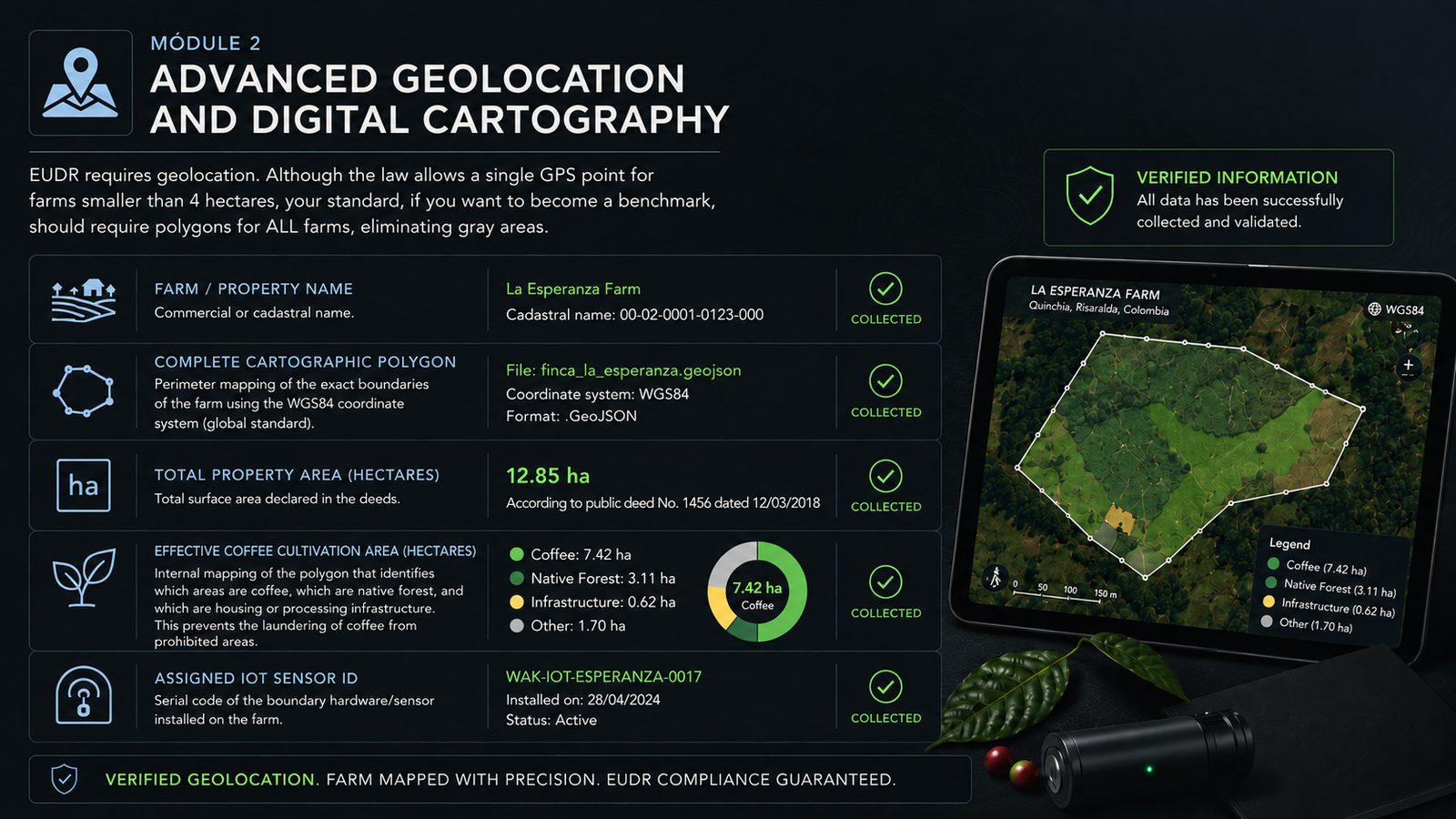
WGS84 polygons, effective coffee area, buffers and geospatial consistency.
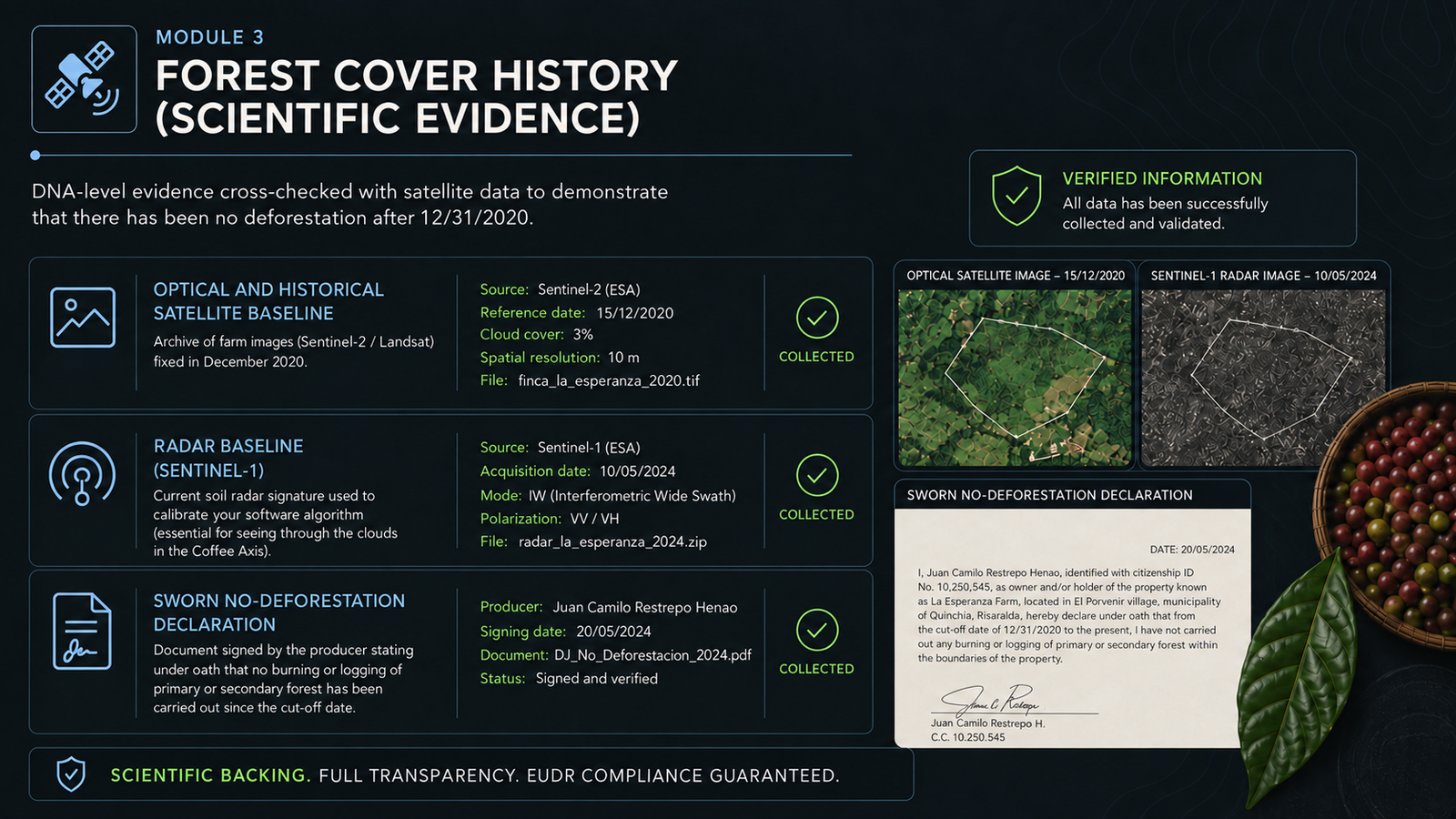
Satellite and radar evidence around the EUDR deforestation cut-off.
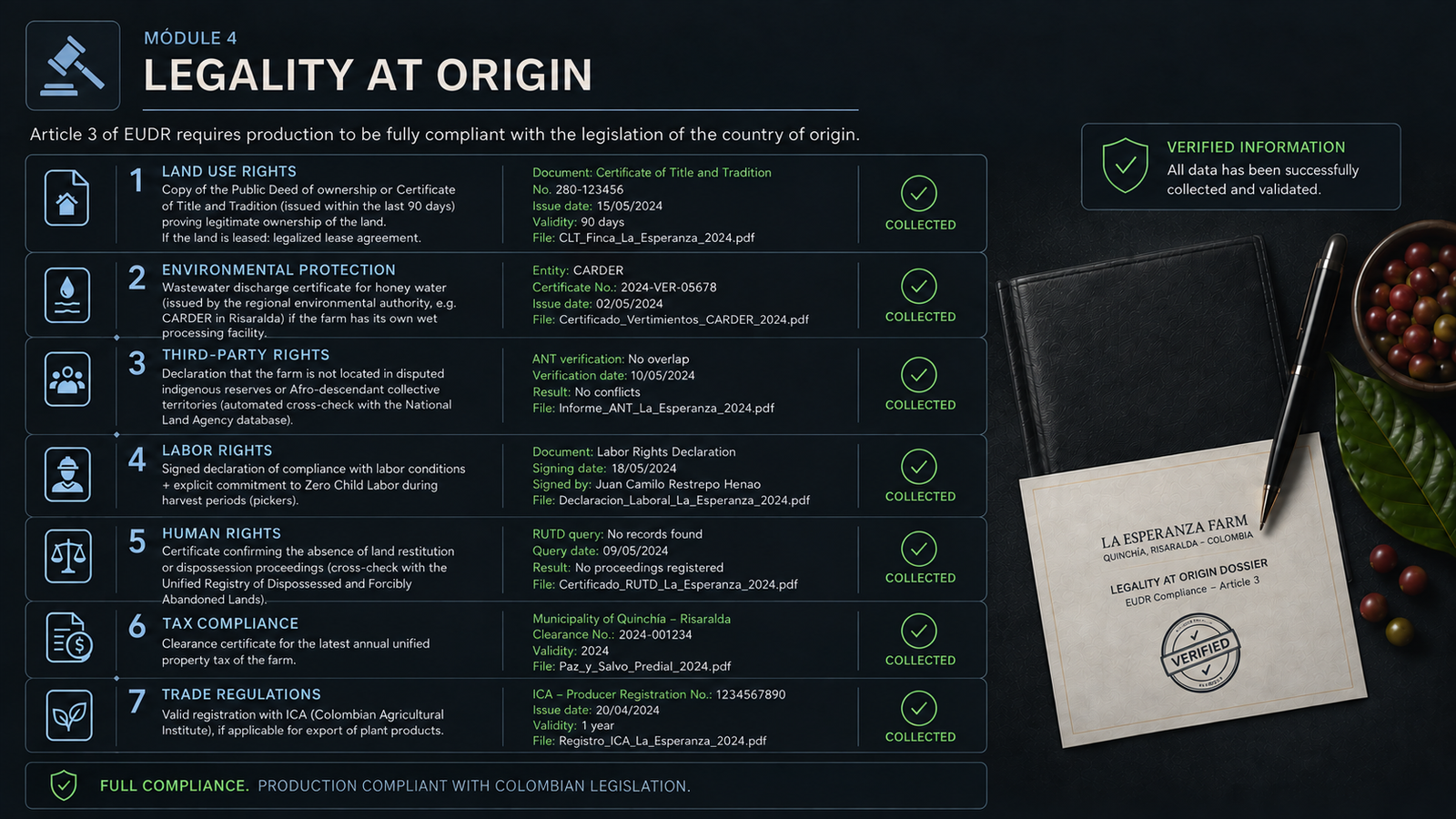
Land tenure and relevant local legal/environmental evidence.
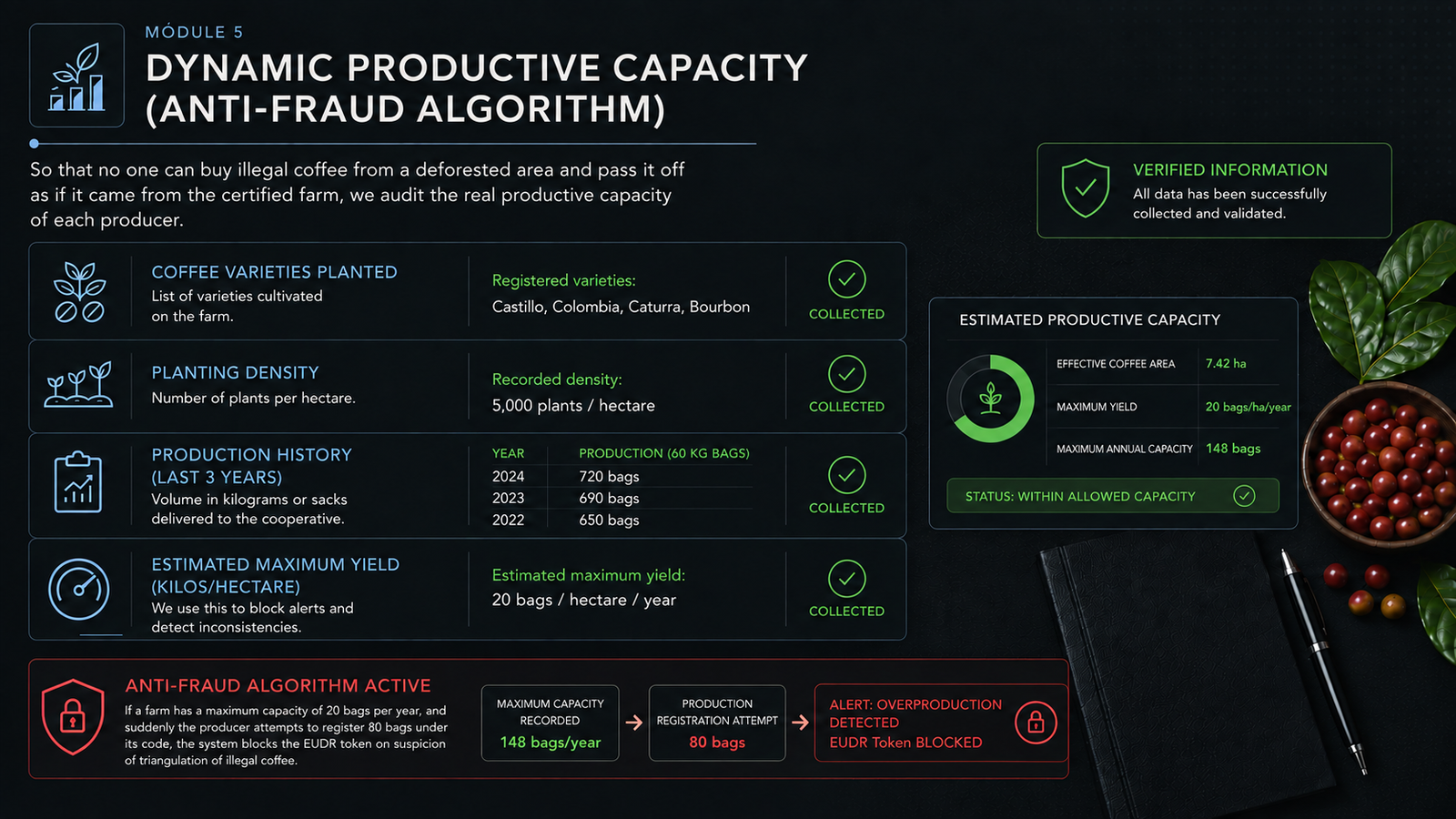
Varieties, density, yield history and anomaly / over-production flags.
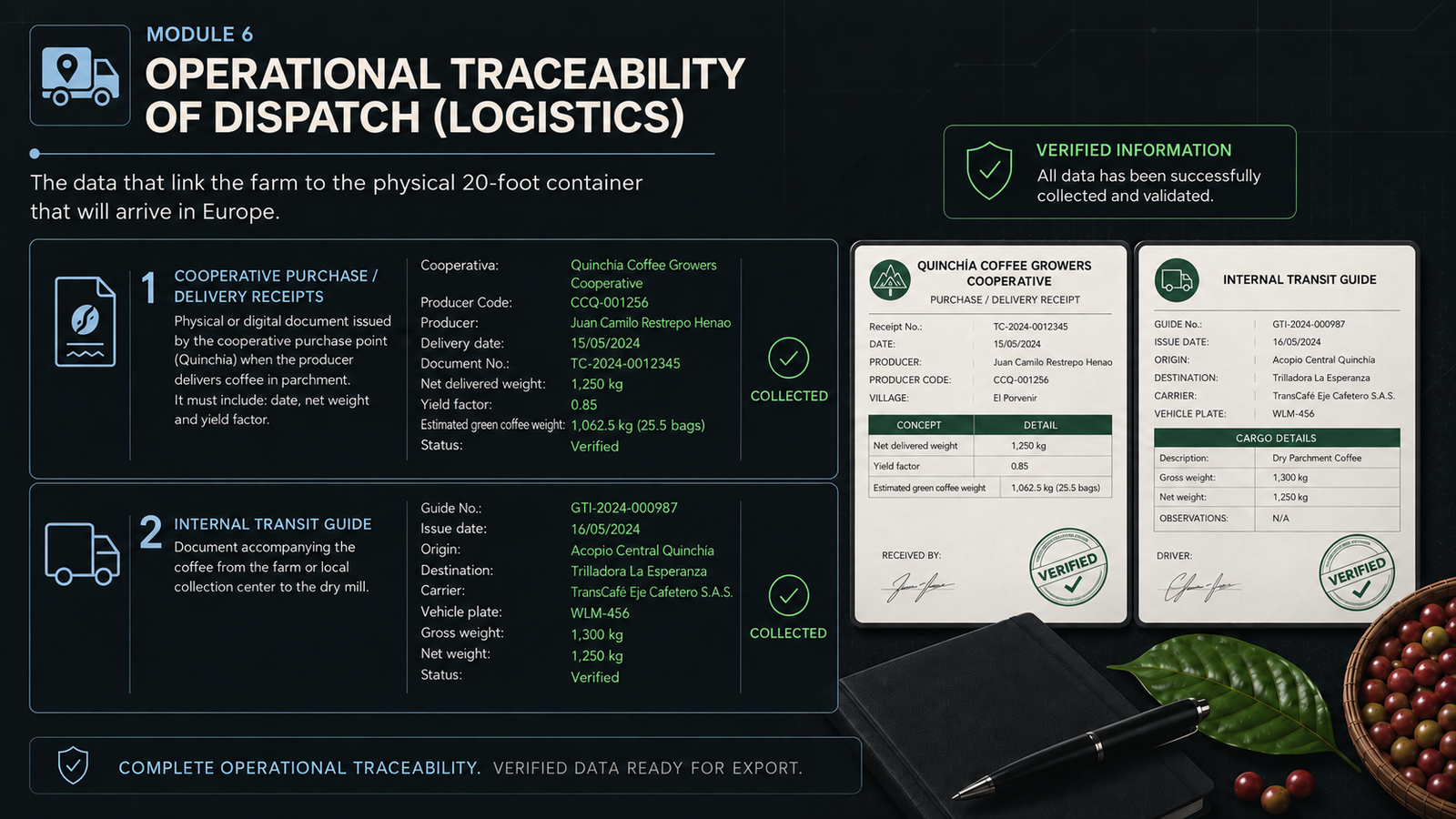
Cooperative receipts, internal transit, mill, container and dispatch linkage.
Plot-level geometry becomes the anchor for every later check: land-use change, legal-origin evidence, capacity, shipment allocation and monitoring.
TrueData links optical satellite imagery, radar where useful, the farm polygon and source metadata into a single case file around the EUDR cut-off date.
Land tenure, environmental evidence and relevant origin-country documents are recorded with issue dates, source files and verification status — so the evidence can be reviewed without reconstructing the case later.
A compliant plot can still be misused if volumes entering the chain are implausible. TrueData compares effective coffee area, planting density and production history to flag anomalies before a shipment inherits the farm’s evidence.
Cooperative delivery records and internal transit documents become part of the same traceable chain, linking origin evidence to batches, mills and export movements.
Shade-grown and agroforestry coffee can require a second layer of field and monitoring data. TrueData’s role is to keep project boundaries, producer consent, land-use history and monitoring evidence traceable — creating a stronger data foundation for carbon project partners and MRV workflows.
TrueData does not represent that data collection alone creates, validates or guarantees carbon credits. Eligibility, additionality, quantification, verification, issuance and commercialization depend on the selected methodology, registry and authorized project participants.
The value is not another dashboard. It is a consistent source record that can feed the workflows around the coffee.
Geolocation, land-use evidence, origin documents, risk/mitigation context and shipment-linked records prepared for operator/trader workflows and DDS data requirements.
A controlled buyer-facing view can expose the relevant provenance and verification status without exposing every confidential source document.
Farm geometry, land-use history, producer identity and monitoring provenance can support screening and project preparation with carbon methodology partners.
TrueData is designed around an auditable sequence: collect, reconcile, assess, link, export and monitor.
Identity, consent, documents, GPS polygon and field evidence.
Normalize files, IDs, dates, geometry and provenance.
Run geospatial, legality and consistency checks; document exceptions.
Connect production and cooperative movements to the verified origin.
Generate evidence reports, buyer views and structured DDS-support fields.
Version changes and add MRV events where carbon programs require them.
Structure farm evidence at source without recreating the same file for every downstream buyer.
Link origin records to actual deliveries, lots and dispatch events before export.
Receive a clearer evidence package and traceable source record for due-diligence workflows.
Use the same verified origin spine as a foundation for methodology-specific screening and MRV.
Start with one cooperative, one shipment lane or one portfolio of farms. We map the evidence gaps, define the capture workflow and build the first verifiable source records.
For cooperatives, exporters, importers, roasters and carbon project partners working with Colombian coffee.
Request an assessment ↗